

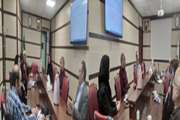
Holding a meeting of the Research Council of the Water Quality Research Center
The 40th meeting of the Research Council of the Center for Water Quality Research was held on October 21, 2024, with the presence of its members.
Investigation on the trend and burden of attributable diseases to community water supply and sanitation and analysis of their inequalities at subnational levels in Islamic Republic of Iran during 1990-2010
Access to safe water and sewage disposal is key to preventing disease, but challenges persist despite global and national efforts. Better management is needed to protect public health. In 2007, the WHO estimated 13 million deaths yearly from environmental factors like pollution. Tackling these could reduce mortality, but more comprehensive data in Iran is needed for effective policies. Analyzing trends in water and sewage systems is essential for prioritizing interventions. A proposed study will examine related disease burdens in Iran from 1990 to 2010 to guide resource allocation and improve health equity.
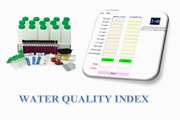
Water Quality Index Calculator for Toxic Parameters in Water Resources
Water Quality Index Calculator for Toxic Parameters in Water Resources
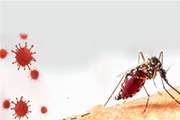
An Environmental Guide for Dengue Fever Vectors Control
An Environmental Guide for Dengue Fever Vectors Control

Analysis of the Water Footprint of Domestic Consumers in Iran
Analysis of the Water Footprint of Domestic Consumers in Iran
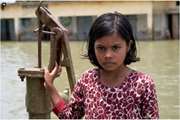
Water and The Global Climate Crisis: 10 Things You Should know
Water and The Global Climate Crisis: 10 Things You Should know
Performance evaluation of supercritical water oxidation (SCWO) to destroy per- and polyfluorinated Substances (PFAS), A systematic review
This systematic review sought to investigate the operating conditions and effects of the Supercritical Water Oxidation (SCWO) process on the degradation and defluorination of Per- and Polyfluoroalkyl Substances (PFAS), with a particular focus on PFOA and PFOS—two of the most prevalent PFAS compounds. The research examined how various factors, including temperature, pressure, and chemical concentration, influence PFAS degradation. Additionally, the study assessed the impact of co-pollutants, such as petroleum hydrocarbons and volatile compounds, on the SCWO process, as well as the gaseous emissions produced during the reaction.
Quantitative investigation of the production of municipal wastewater and the development of a conceptual model for the estimation reused wastewater using the Monte Carlo simulation method
Water scarcity is a global crisis, worsened by population growth, urbanization, and climate change. By 2025, about 1.8 billion people will experience water shortages. Iran, where 90% of the land has dry or semi-dry climates, is particularly affected due to reduced rainfall, deforestation, and groundwater depletion. The United Nations' Sustainable Development Goal 6 (2015) promotes recycling and reusing wastewater to address water shortages. While some urban areas in Iran have wastewater treatment facilities, reuse remains limited. Expanding wastewater reuse is vital to meet Iran's growing water demands, and better management of wastewater resources at local levels is essential.
Estimating the physical and economical productivity of water in the agricultural sector with an emphasis on crop products in Iran
Iran is facing a water crisis due to climate change and poor water management, leading to drought and severe challenges for agriculture. With 92% of water used by the agricultural sector, inefficient irrigation and the cultivation of water-intensive crops are worsening the situation. Better management practices and a shift to less water-demanding crops are essential to improve water use. This research will assess the productivity of various crops to identify and prioritize those with low water efficiency, aiming to reduce water waste, enhance agricultural sustainability, and improve food and water security in the country.
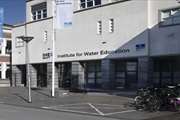
The participation of the faculty member and head of the Water Quality Research Center in the short-term fellowship program at the IHE Delft Institute in the Netherlands.
The participation of Dr. Mehdi Hadi, a faculty member and the head of the Water Quality Research Center, in the short-term fellowship program on the design of decentralized water supply and sanitation systems at the IHE Delft Institute for Water Education in Delft, Netherlands.